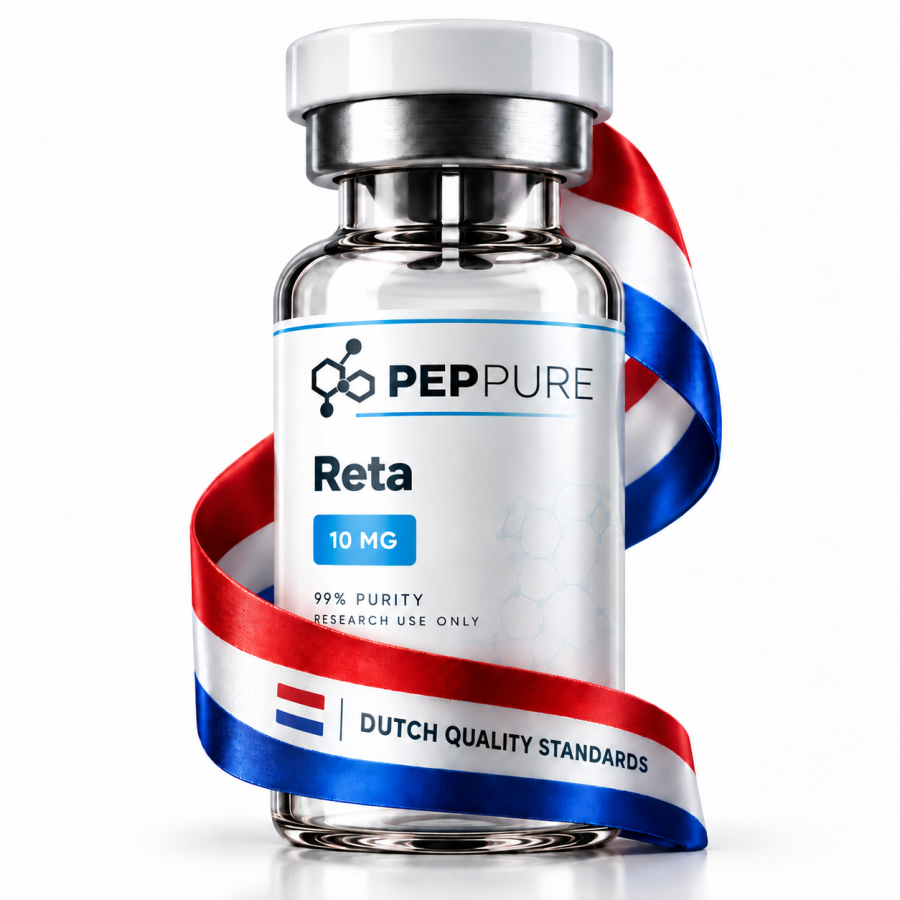
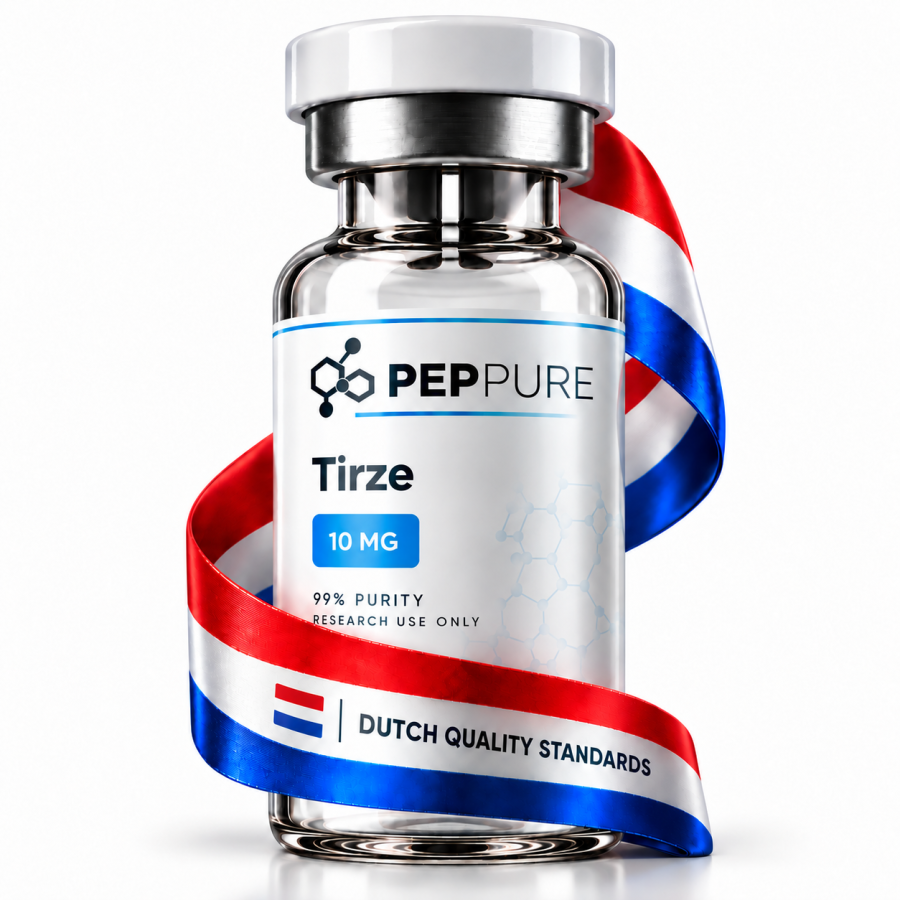
Semaglutide, Tirze and Reta are often mentioned in the same breath. They also belong to the same family: synthetic peptides that mimic gut hormones. The big difference lies in the number of receptors they activate: one, two or three. In this article we compare their mechanisms and the research side by side.
At a glance
| Semaglutide | Tirze | Reta | |
|---|---|---|---|
| Receptors | GLP-1 | GLP-1 + GIP | GLP-1 + GIP + glucagon |
| Type | Single agonist | Dual agonist | Triple agonist |
| Molecular basis | Human GLP-1 | Human GIP | GIP-like chain |
| Half-life | ± 7 days | ± 5 days | ± 6 days |
| Status in the EU | Authorised medicine | Authorised medicine | In phase 3 trials |
All three have a fatty-acid tail that binds to albumin in the blood. This slows their breakdown, which is why they could be administered once a week in studies.
The three hormones behind the mechanism
To understand the difference, you need to know what the three endogenous hormones do:
- GLP-1 (glucagon-like peptide-1) is released from the gut after a meal. It enhances insulin secretion when blood sugar rises, suppresses glucagon, slows gastric emptying and sends a satiety signal via the brain.
- GIP (glucose-dependent insulinotropic polypeptide) is the second incretin hormone. It also enhances insulin secretion and acts on adipose tissue, where it influences how fat is stored and processed.
- Glucagon is the counterpart of insulin. It prompts the liver to release glucose and energy, and research has linked it to higher energy expenditure and the breakdown of liver fat.
The more of these pathways a molecule engages, the more broadly it affects energy balance. That, in one sentence, is the progression from semaglutide via Tirze to Reta.
Semaglutide: GLP-1 only
Semaglutide is a modified version of human GLP-1 and is 94% identical to it. Two modifications make the difference: a different amino acid at position 8, so that the enzyme DPP-4 can no longer break it down, and a C18 fatty-acid tail for binding to albumin. Natural GLP-1 is broken down within minutes; semaglutide has a half-life of about a week.
In the STEP 1 trial, 1,961 adults with obesity or overweight received semaglutide (2.4 mg per week) or placebo for 68 weeks. Body weight fell by an average of 14.9%, compared with 2.4% on placebo. PepPure does not sell semaglutide; we mention it here as a reference.
Tirze: GLP-1 and GIP
Tirze is built on the amino acid sequence of GIP, modified so that it also activates the GLP-1 receptor. At the GIP receptor it is roughly as potent as natural GIP; at the GLP-1 receptor it is weaker than natural GLP-1. Researchers therefore call it an imbalanced dual agonist, with the emphasis on GIP.
In SURMOUNT-1, body weight in the highest dose group fell by an average of 20.9% after 72 weeks, compared with 3.1% on placebo. SURMOUNT-5 was the first head-to-head comparison of Tirze and semaglutide in people with obesity without diabetes: after 72 weeks, weight loss was 20.2% with Tirze versus 13.7% with semaglutide.
Reta: GLP-1, GIP and glucagon
Reta goes one step further and also activates the glucagon receptor. At the GIP receptor it is more potent than natural GIP; at the GLP-1 and glucagon receptors it is weaker than the natural hormones. That ratio was chosen deliberately: enough glucagon activity for extra energy expenditure, without blood sugar getting out of control, because GLP-1 and GIP keep it in balance.
In the phase 2 obesity trial (338 participants, 48 weeks), body weight in the highest dose group was on average 24.2% lower, compared with 2.1% on placebo. A substudy showed a marked reduction in liver fat. The phase 3 programme TRIUMPH has been running since 2023; Reta is not authorised as a medicine in Europe.
The studies side by side
| Study | Compound | Duration | Weight change | Placebo |
|---|---|---|---|---|
| STEP 1 (2021) | Semaglutide | 68 weeks | −14.9% | −2.4% |
| SURMOUNT-1 (2022) | Tirze | 72 weeks | −20.9% | −3.1% |
| Phase 2 (2023) | Reta | 48 weeks | −24.2% | −2.1% |
A caveat: these are different studies with different participants and durations, so you cannot compare the percentages like for like. Only SURMOUNT-5 compared two compounds head to head. The Reta figures also come from a phase 2 trial, which is smaller than the phase 3 trials of the other two.
Side effects in the studies
The three compounds show a similar pattern. The most commonly reported side effects were gastrointestinal: nausea, diarrhoea, constipation and vomiting, especially in the weeks when the dose was being built up. With Reta, a dose-dependent increase in heart rate was also observed.
Which one should you choose for research?
That depends on your research question. If you want to study the effect of GIP alongside GLP-1, Tirze is the logical reference: it is the best-documented dual-receptor molecule. If you want to investigate the role of glucagon activation, for example on energy expenditure or liver fat, Reta is the only one of the three that engages that pathway.
In both cases, the reliability of your results stands or falls with the purity of your material. So also read What does 99% purity really mean for peptides? and check the certificate of analysis for each batch.
Research Use Only. This article summarises published research and is not medical advice or advice on use. PepPure’s peptides are intended exclusively for in-vitro research and laboratory use.